
Explore
How to start learning Judaism
A calm first route through terms, sources, practice and community.
The short answer
Do not begin by trying to understand all of Judaism. That is the fastest way to learn a lot of disconnected facts and build no real path. Begin with a fixed time, a clear order and one question that matters in your actual life.
The beginner’s problem is usually not a lack of information. It is excess information without a hierarchy. Torah, Talmud, midrash, halakhah, prayer, holidays, history and philosophy are all connected, but they do not need to be learned at once.
A useful first route has three layers. First, read a short passage from the Torah and understand its plain meaning. Second, learn one area of daily Jewish practice in clear language. Third, connect the learning to one action. This prevents study from becoming either abstract theory or a random list of rules.
Consistency matters more than volume. Fifteen focused minutes at the same time each day are worth more than a long burst followed by three weeks of nothing. The first goal is not to become knowledgeable. It is to become someone who studies regularly.
Do not jump from one loud voice to another. Keep a short list of reliable sources, write down what you do not understand and separate three questions: What does the source say? How has the tradition understood it? What does it require from me now? Those are not the same question.
When the issue is practical halakhah for your home, family or personal status, a general article is not a ruling. Use the article to understand the subject, then ask a qualified authority about the exact case.
Three rules for a good beginning
A first seven-day route
- 01Choose one fixed fifteen-minute slot for the next seven days.
- 02Read a short passage from the weekly Torah portion and one clear explanation of its plain meaning.
- 03Write down one honest question. Do not rush to replace it with a slogan.
- 04Choose one small action connected to what you learned and repeat it for the week.
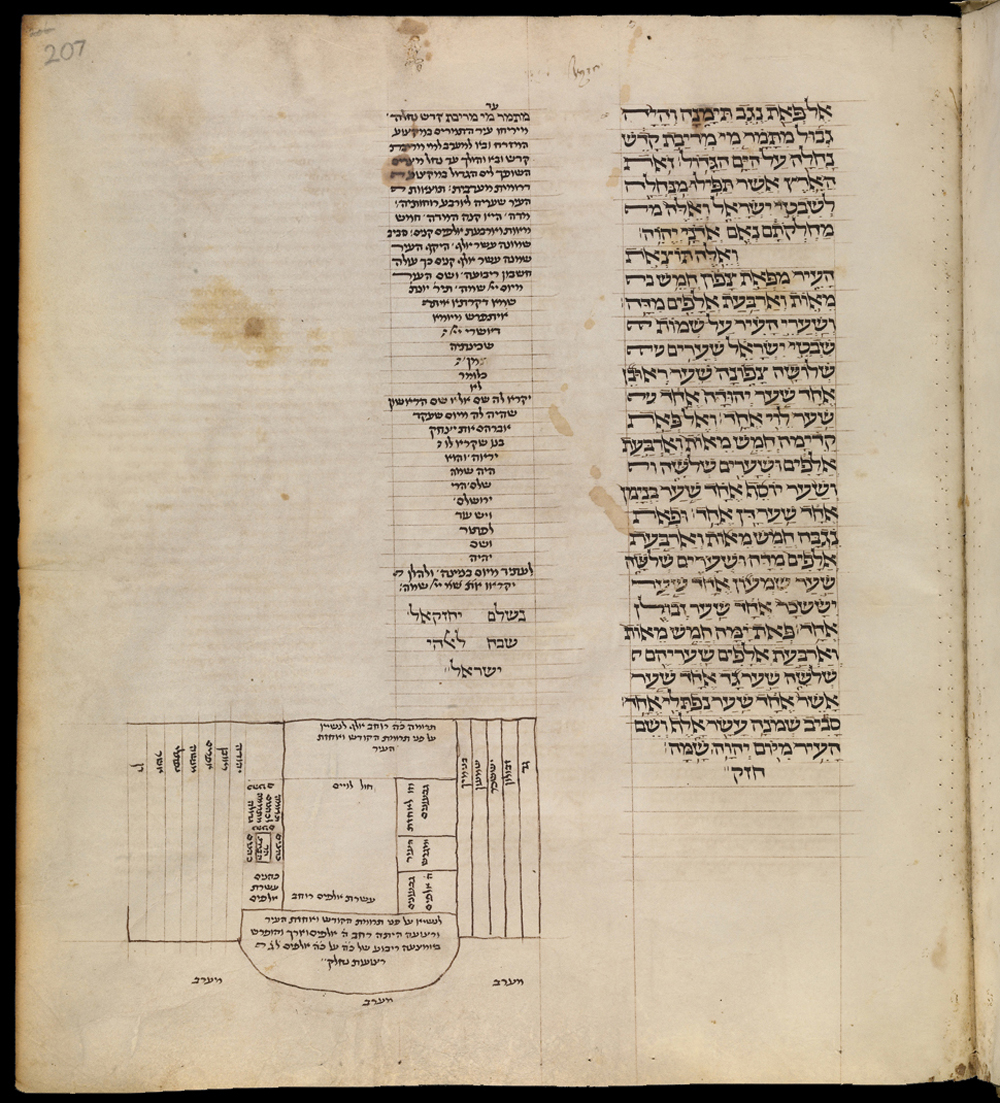
Source lineage
Read the source with its surrounding argument.
The page separates the canonical reference, the commentary and OJS interpretation so the reader can see where each conclusion begins.
This archival object shows the tradition of text and commentary. It is not presented as the exact source quoted on this page.
Book of Prophets with Rashi’s commentary · late 13th century · public-domain reproduction.
What the sources actually say
Kitzur Shulchan Aruch 27:1
Set a fixed time
After prayer, one should set a time for Torah study. This time must be fixed and should not be moved even for the prospect of a large profit.
The first practical instruction is not ‘learn everything’. It is ‘make the time fixed’. Order comes before volume.
Rambam, Mishneh Torah, Laws of Torah Study 1:11
Circumstances do not remove the need for a learning rhythm
Every man in the Jewish people is obligated to study Torah: poor or rich, healthy or ill, young or very old ... he must set aside time for Torah study by day and by night.
Rambam states the legal obligation here in its classical form. The practical point for a beginner is clear: do not wait for an ideal life before starting.
Pirkei Avot 1:17; Talmud, Kiddushin 40b
Study is measured by what it changes
The essential thing is not study, but action. Great is study, because it leads to action.
These statements protect against two errors: action without understanding and study without consequence.
This page gives a learning route, not a personal halakhic ruling. For a concrete practical case, ask a qualified rabbinic authority.
Questions you can explore
Related guides
Judaism for beginners
How to start learning Judaism without getting overwhelmed
Judaism can feel enormous at the beginning: Torah, prayer, Shabbat, holidays, Hebrew words, community and practice. A calm beginning does not require mastering everything. It starts with one honest question and one small repeated action.
Everyday life
Torah guidance for everyday life: small steps, not slogans
Torah guidance is not only for rare religious moments. It can shape speech, work, money, family, rest, food and the way a person responds under pressure.