
Explore
A new beginning
How to move after a change without pretending the past did not happen.
A new beginning is not a blank page
A new beginning may follow a move, a separation, a loss, a recovery, a decision or the recognition that an old way of living can no longer continue. The temptation is to demand a clean break: forget the past, become a different person and feel hopeful immediately. Jewish sources offer a more sober picture. Time has seasons, Yaakov enters a new name while still carrying the mark of the struggle, and real change is measured through concrete actions rather than declarations.
First name the transition accurately. What ended: a relationship, a role, a place, a routine, an expectation or a version of yourself? A vague sentence such as “everything has changed” makes the whole life feel unstable. A precise sentence creates a boundary around the loss and shows that not everything disappeared.
Kohelet says that every matter has its time. The verse does not tell a person to enjoy every season or pretend that each change is good. It says that life is not one permanent condition. There is a time to hold, a time to release, a time to tear and a time to sew. Recognizing that a period has ended is not betrayal of what mattered inside it.
After Yaakov’s night struggle, he receives the name Israel. Yet the next morning he walks with a limp. The Torah does not present renewal as returning untouched. A person can cross into a new stage with greater strength and a real wound at the same time. Healing does not require rewriting the past as harmless.
Divide the transition into three columns: what ended, what remains, and what now begins. Responsibilities, children, debts, promises, grief and lessons may remain even when the old structure is over. At the same time, habits, roles and expectations that no longer belong to the present may be released. This prevents both denial and unnecessary loyalty to a life that has already ended.
Rambam’s laws of teshuvah concern moral responsibility, not every painful change. Still, their structure sets an important limit for a chosen new beginning: stop the wrong action, acknowledge and regret it, say clearly what happened, and form a concrete resolve for the future. A slogan such as “from today everything is different” is not yet change. Repeated behaviour is the evidence.
Do not rebuild the whole life in one week. Choose one thirty-day anchor: a fixed waking time, one weekly conversation, a daily walk, a study period, a budget review or one boundary that protects the new direction. A small practice cannot solve the whole transition, but it can give the new chapter a visible beginning.
Four principles for beginning again
A seven-day transition route
- 01Day 1 — Write one factual sentence describing what ended.
- 02Day 2 — Make three lists: ended, remains, begins.
- 03Day 3 — Name one regret or repair that is genuinely yours; do not take responsibility for another person’s actions.
- 04Day 4 — Choose one thirty-day anchor that supports the new direction.
- 05Day 5 — Tell one trustworthy person what you are trying to build and what support would actually help.
- 06Day 6 — Remove one practical obstacle or prepare one part of the environment for the new habit.
- 07Day 7 — Review evidence, not mood: what did you do, what resisted, and what is the next repeatable step?
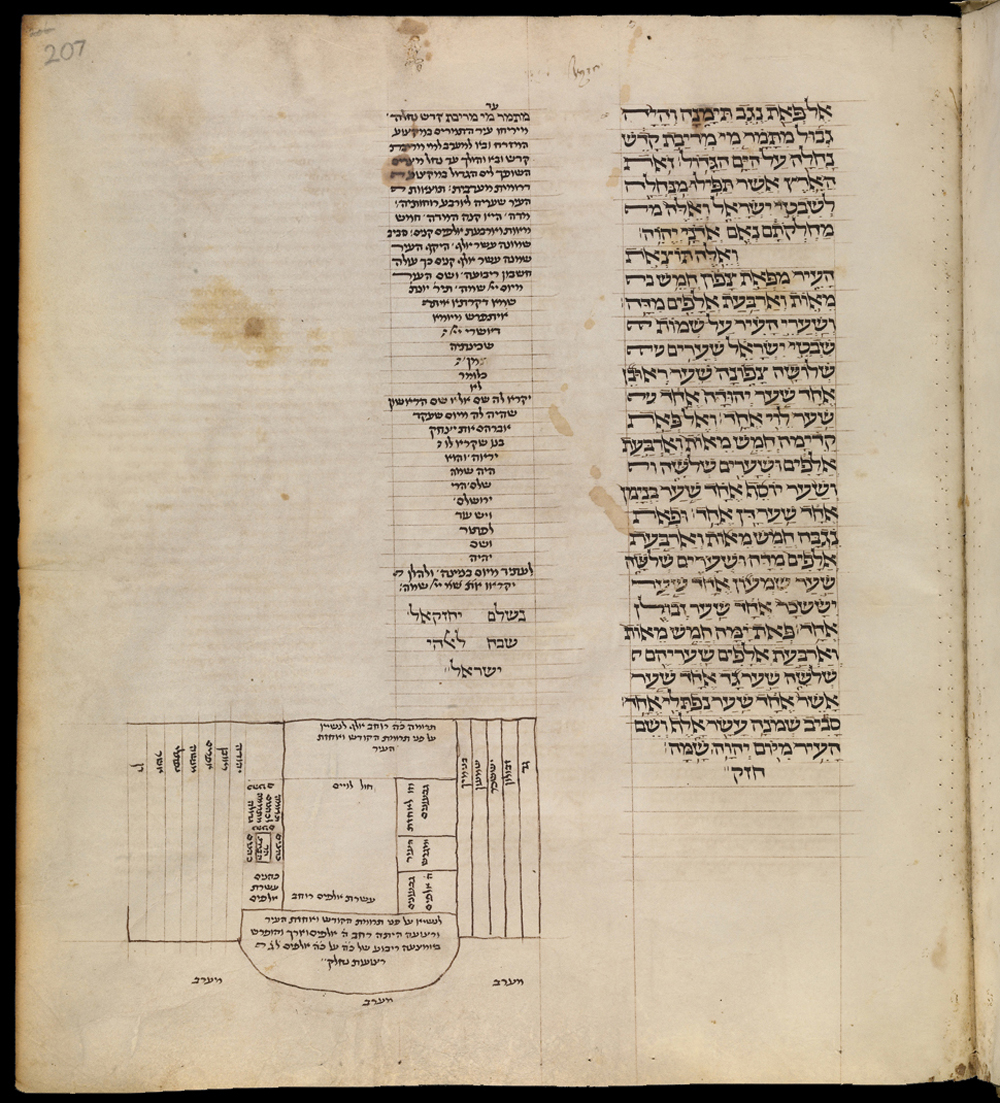
Source lineage
Read the source with its surrounding argument.
The page separates the canonical reference, the commentary and OJS interpretation so the reader can see where each conclusion begins.
This archival object shows the tradition of text and commentary. It is not presented as the exact source quoted on this page.
Book of Prophets with Rashi’s commentary · late 13th century · public-domain reproduction.
What the sources actually say
Kohelet / Ecclesiastes 3:1
Life contains distinct seasons
For everything there is a time, and a season for every matter under heaven.
The verse does not call every season pleasant. It rejects the demand that one condition must last forever. Ending and beginning can both belong to an ordered human life.
Torah, Bereshit / Genesis 32:29, 32:32
A new identity does not erase the wound
Your name shall no longer be called Yaakov, but Israel... The sun rose upon him... and he was limping on his thigh.
The story holds transformation and injury in the same morning. Yaakov receives a new name after the struggle, but he does not walk away as though nothing happened.
Rambam, Mishneh Torah, Laws of Teshuvah 2:2
Change becomes real through concrete steps
Teshuvah is when the sinner abandons the sin, removes it from thought, and resolves in the heart not to do it again.
Rambam is defining moral repentance, not every life transition. The relevant principle is that a new direction must enter behaviour. Intention without a changed practice remains incomplete.
This page offers reflection for ordinary life transitions; it is not therapy, medical care, legal advice or a halakhic ruling. A transition involving abuse, danger, coercion, severe depression, inability to function, thoughts of self-harm or urgent physical symptoms requires qualified professional or emergency help. Divorce, custody, immigration, employment, debt and medical decisions require the relevant specialist. Do not use the language of “new beginning” to pressure yourself or another person to forgive, reconcile or move on before safety and responsibility have been addressed.
Questions you can explore
Related guides
Everyday life
Torah guidance for everyday life: small steps, not slogans
Torah guidance is not only for rare religious moments. It can shape speech, work, money, family, rest, food and the way a person responds under pressure.
Sources
Jewish sources for life questions: how to ask well
Many people come to Jewish sources with a real-life question, not an academic topic. The key is to ask in a way that lets the sources illuminate the actual situation.