
Explore
Making a difficult decision
Separate facts, fear, values and consequences before choosing your next step.
A decision is not a prediction
A difficult decision becomes heavier when we demand something no decision can provide: certainty about the future. Jewish sources do not offer a technique for discovering a hidden guaranteed answer. They place the person inside responsibility: clarify what is true, weigh the consequences, seek honest counsel and choose the next action without pretending to control the outcome.
The first task is not to decide faster. It is to state the real decision. 'What should I do with my life?' is too large to examine. 'Do I accept this offer, stay for six more months, or decline now?' creates options that can be compared. A vague question keeps anxiety moving; a concrete question gives thought somewhere to stand.
Then separate four columns: facts, interpretations, fears and values. A fact can be checked. An interpretation is the meaning you currently give it. A fear is a possible loss, not proof that the loss will occur. A value is what you refuse to trade away lightly. Many decisions feel impossible because these four categories have been mixed into one emotional sentence.
Jewish wisdom does not reduce choice to immediate comfort. Pirkei Avot asks a person to compare the present cost of a right action with its larger reward, and the immediate gain of a wrong action with its later cost. The point is not to calculate heaven like a spreadsheet. It is to stop allowing the nearest pleasure or pain to occupy the whole horizon.
Counsel is also part of the process, but counsel is not voting. Choose one or two people who understand the relevant reality, can disagree with you and do not profit from a particular answer. Ask them to identify what you may be missing, not to take the decision away from you. Ten opinions from interested people usually add noise rather than wisdom.
Some choices must be made before complete clarity arrives. In that case, distinguish a final decision from a responsible next step. You may not yet know whether to leave a profession, end a partnership or move a family. You can still gather one missing fact, set a deadline, have one necessary conversation or stop an action that is already causing damage. Responsibility often begins before certainty.
Three disciplines for a hard choice
A seven-day decision route
- 01Write the decision as two or three concrete options. Include the option of delaying only when delay is genuinely available.
- 02Make four lists: verified facts, assumptions, feared outcomes and values that must be protected.
- 03For each option, write the likely cost now, the possible cost later, what is reversible and what may be difficult to undo.
- 04Ask one disinterested, experienced person: 'What am I not seeing?' Set a decision date or one responsible next action, and stop collecting opinions after that point.
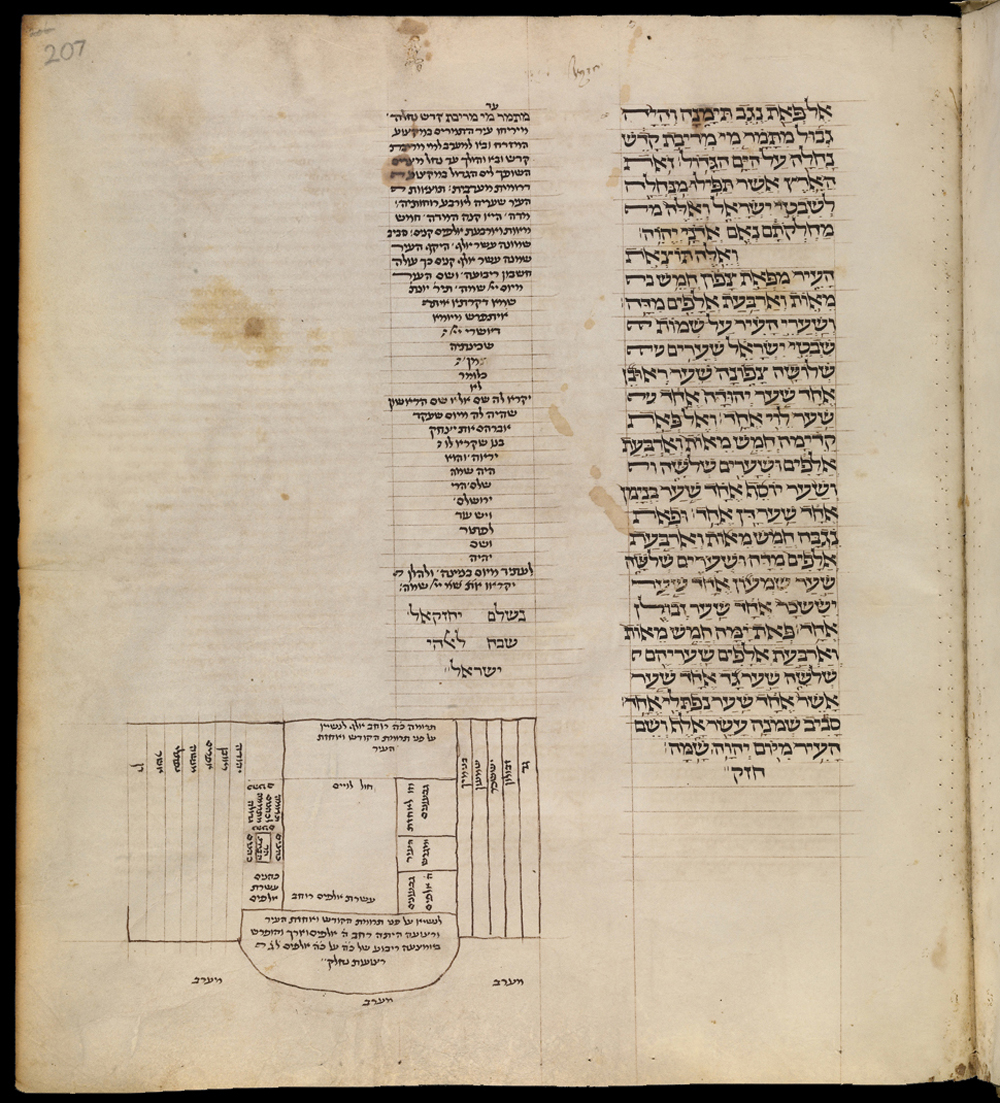
Source lineage
Read the source with its surrounding argument.
The page separates the canonical reference, the commentary and OJS interpretation so the reader can see where each conclusion begins.
This archival object shows the tradition of text and commentary. It is not presented as the exact source quoted on this page.
Book of Prophets with Rashi’s commentary · late 13th century · public-domain reproduction.
What the sources actually say
Torah, Deuteronomy 30:19
Choice creates responsibility
I have set before you life and death, blessing and curse; therefore choose life.
The verse does not promise that every correct choice will feel easy or produce a predictable result. It rejects passivity: values must become an actual choice.
Pirkei Avot 2:1
Compare the gain with the cost
Weigh the loss of a commandment against its reward, and the gain of a transgression against its loss.
The Mishnah lengthens the time horizon. An immediate inconvenience or benefit is not the whole consequence of an action.
Mishlei, Proverbs 20:18
Test a plan through counsel
Plans are established by counsel; and with wise guidance wage war.
Seeking advice is not weakness and does not transfer responsibility. It tests a plan against knowledge and perspectives the decision-maker may lack.
This page offers a source-based framework for reflection; it does not choose for you and does not replace professional financial, medical, legal, safety or mental-health advice. A decision involving danger, abuse, self-harm, urgent medical symptoms, legal deadlines or large irreversible financial exposure requires qualified help. For a concrete halakhic ruling, consult a competent rabbi who knows the facts of the case.
Questions you can explore
Related guides
Sources
Jewish sources for life questions: how to ask well
Many people come to Jewish sources with a real-life question, not an academic topic. The key is to ask in a way that lets the sources illuminate the actual situation.
Everyday life
Torah guidance for everyday life: small steps, not slogans
Torah guidance is not only for rare religious moments. It can shape speech, work, money, family, rest, food and the way a person responds under pressure.