
Explore
Jewish prayer
How prayer works when you do not know Hebrew, the siddur or what you are supposed to feel.
The short answer
Jewish prayer is not a test of Hebrew fluency and not a performance of the correct emotion. It is a disciplined meeting built from praise, request and gratitude. The siddur gives a person words when their own words are confused or absent. A beginner can start honestly: understand one short passage in a language they know, learn a few Hebrew words gradually and protect a regular time for prayer.
Jewish prayer holds two things together: a fixed text and a personal voice. The fixed text prevents prayer from shrinking to whatever happens to occupy the mind today. Personal words prevent the text from becoming a sound track recited without a person inside it. The aim is not to choose one against the other, but to let the siddur educate personal speech.
The language problem is not new. Rambam explains that after exile many Jews no longer possessed a clear common language, and the sages established a stable prayer text so that people could express praise, needs and gratitude coherently. The siddur was created as help for human limitation, not as a barrier for experts to guard.
Hebrew matters because it connects a person to the shared words of Jewish communities across places and generations. Understanding also matters. Reading sounds that carry no meaning can become mechanical. A realistic beginning is to read a reliable translation, know what section you are saying and learn the Hebrew gradually rather than waiting for perfect fluency.
Kavanah is often translated as intention. It does not mean producing an intense spiritual emotion on command. At its most practical level, it means gathering the mind, remembering before whom one stands and attending to the words being said. Some days the heart responds; some days the work is simply to remain present rather than rush through.
Do not begin with the entire prayer book. Choose one stable doorway: Modeh Ani on waking, one blessing, the first paragraph of the Shema, Psalm 145 or a short personal prayer. Read the meaning first, say it slowly and finish with one sentence in your own words. Then repeat the same practice long enough for it to become a real part of the day.
Three ideas to keep
A first seven-day route
- 01Choose one fixed five-minute period and one short prayer for all seven days.
- 02Read the translation before praying and underline one phrase you understand clearly.
- 03Learn the meaning and pronunciation of one Hebrew line, not the whole service.
- 04Before beginning, sit quietly for one minute; after the text, add one honest sentence in your own words.
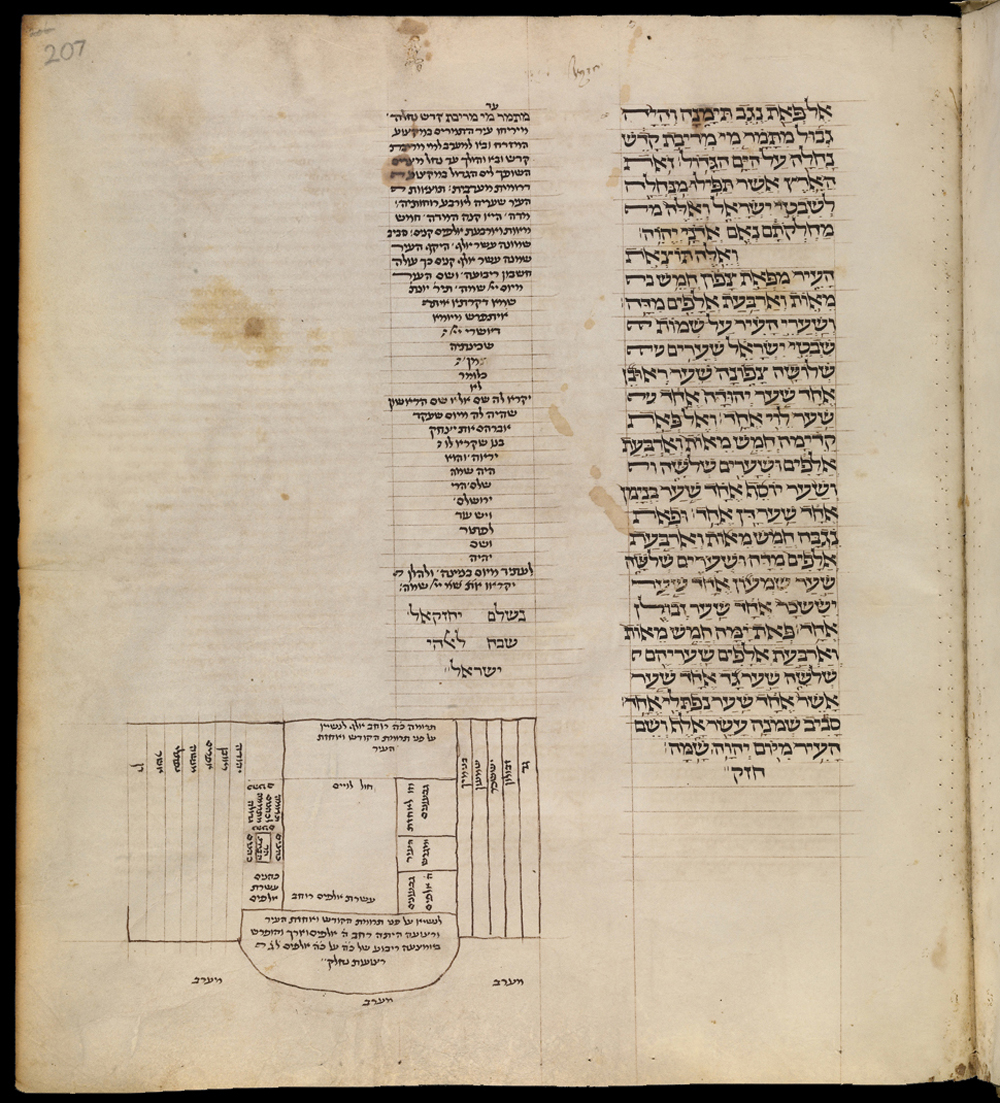
Source lineage
Read the source with its surrounding argument.
The page separates the canonical reference, the commentary and OJS interpretation so the reader can see where each conclusion begins.
This archival object shows the tradition of text and commentary. It is not presented as the exact source quoted on this page.
Book of Prophets with Rashi’s commentary · late 13th century · public-domain reproduction.
What the sources actually say
Rambam, Mishneh Torah, Laws of Prayer 1:2
Prayer has a basic structure
A person should first speak of the praise of the Holy One, blessed be He, then ask for the needs they require, and afterward offer praise and thanks for the good bestowed upon them.
Prayer is not only asking. Praise widens the frame, request names reality and gratitude prevents need from becoming the whole relationship.
Rambam, Mishneh Torah, Laws of Prayer 4:16
Attention begins before the words
Before prayer one should sit for a short while in order to prepare the heart, and afterward pray calmly and with feeling. Prayer should not be made into a burden that one throws off and leaves.
Kavanah is supported by preparation. One quiet minute can change the quality of five minutes more than adding another page.
Psalms 145:18
Sincerity matters more than display
The Lord is close to all who call upon Him, to all who call upon Him sincerely.
The verse does not require theatrical emotion. It asks for truthfulness: bringing the person who actually exists into the prayer.
This page is an educational introduction, not a ruling on how a specific person fulfils a prayer obligation. Exact questions about required texts, language, pronunciation, prayer times, missed prayers, minyan, gender-specific obligations or community custom require competent guidance for the actual case.
Questions you can explore
Related guides
Prayer
Jewish prayer for beginners: how to begin without pressure
Prayer can feel difficult when a person does not know Hebrew, does not know the siddur and does not know what to feel. Jewish prayer begins more simply: standing honestly before God with words, attention and repetition.
Tehillim
Tehillim when life is hard: one line can be enough
When life is heavy, long explanations can feel impossible. Tehillim gives a person permission to speak from fear, gratitude, anger, hope and exhaustion.