
Explore
Jewish identity and belonging
Questions about roots, belonging, practice and finding your place without pretending.
The short answer
Jewish identity is not one test that you either pass or fail. It can include status, family history, memory, practice and connection to a people. These parts often overlap, but not always. A useful beginning is to separate them instead of asking one crushing question: ‘Am I Jewish enough?’
The first distinction is between Jewish status and Jewish belonging. Status is a halakhic question. Belonging is lived through memory, language, relationships, practice and participation. A person can be Jewish by halakhic status and still feel distant. Another person can feel deeply connected and still need a formal clarification of status. Feelings do not settle the legal question, and the legal answer does not automatically create a lived connection.
The Torah does not introduce Abraham through a pedigree test. It begins with a call to move, accept responsibility and become a blessing. Jewish identity is therefore not only about where a person comes from. It also asks what that person carries forward, what obligations they accept and what good they bring into the world.
Belonging does not require performance. You do not need to imitate another family’s accent, clothing or level of observance. Pretending may win approval for a moment, but it does not build a durable Jewish life. An honest beginning is stronger: this is what I know, this is what I do, this is what I do not yet understand.
Practice matters because identity becomes real through repetition. A Friday-night meal, a blessing learned carefully, a family story recorded, a class attended regularly or a visit to a community can do more than a dramatic declaration. Belonging grows when memory, action and people meet repeatedly.
No single community represents the entire Jewish people. Communities differ in language, custom, observance and authority. The task is not to find a place that flatters you. It is to find a place where questions can be asked honestly, people are treated with dignity and the tradition is not reduced to slogans. If the issue is maternal descent, conversion, marriage or formal communal status, that specific question requires a recognized rabbinic authority or beit din.
Three distinctions that help
A first seven-day route
- 01Make four short lists: status, family story, practice and community. Write facts only; do not judge them yet.
- 02Record one family name, date, object, recipe or story that carries Jewish memory.
- 03Choose one small Jewish practice you can repeat this week without pretending to be someone else.
- 04Have one real conversation: with a relative, teacher, rabbi or community member who can listen without turning the conversation into an examination.
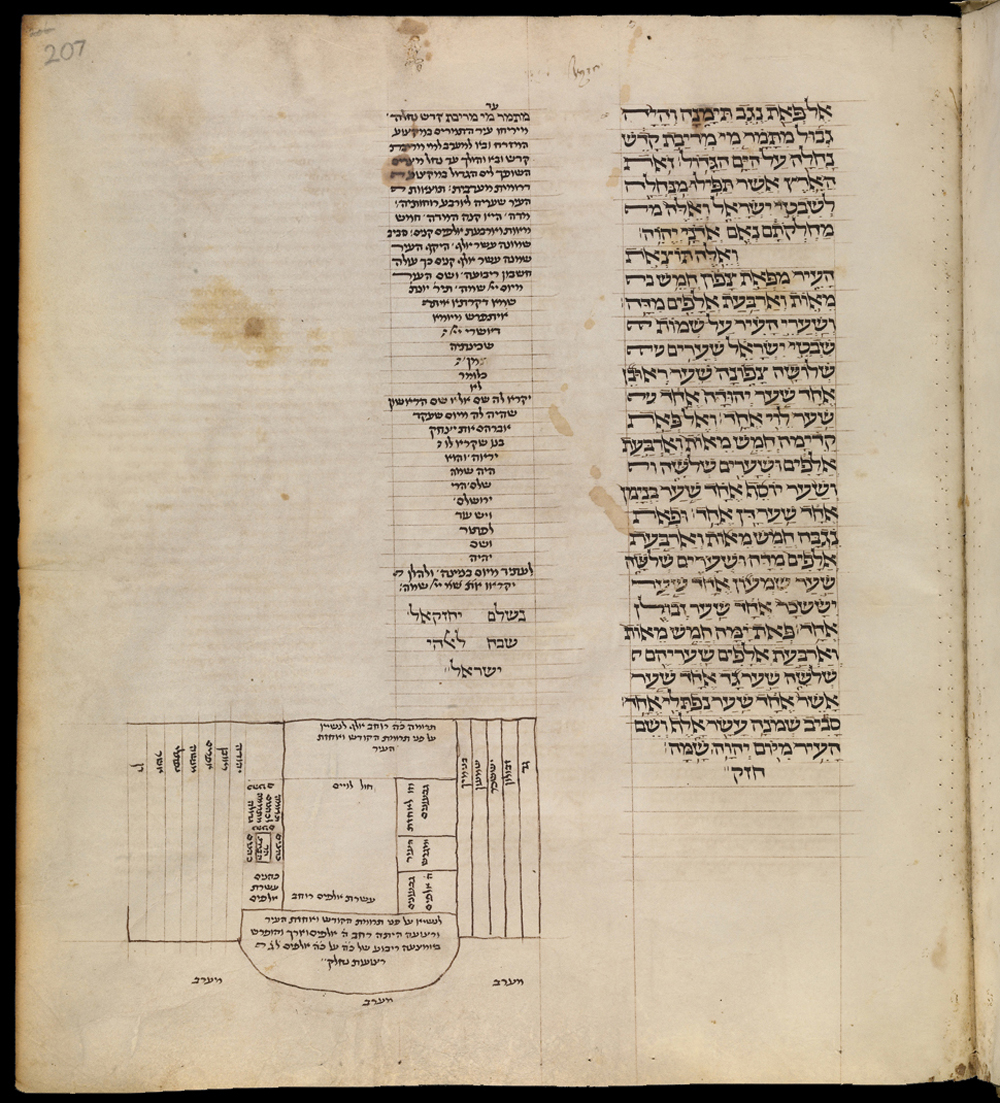
Source lineage
Read the source with its surrounding argument.
The page separates the canonical reference, the commentary and OJS interpretation so the reader can see where each conclusion begins.
This archival object shows the tradition of text and commentary. It is not presented as the exact source quoted on this page.
Book of Prophets with Rashi’s commentary · late 13th century · public-domain reproduction.
What the sources actually say
Torah, Genesis 12:1–3
Identity begins with a journey and a responsibility
Go from your land, from your birthplace and from your father’s house ... I will make you into a great nation ... and you shall be a blessing.
The first Jewish journey is not presented as a search for a label. It joins origin, movement, responsibility and the effect a person has on others.
Ruth 1:16–17
Belonging joins people, path and faith
Where you go, I will go, and where you stay, I will stay. Your people are my people, and your God is my God.
Ruth does not describe belonging as a private feeling. It is a commitment to people, shared life, place and faith.
Rambam, Mishneh Torah, Laws of First Fruits 4:3
The tradition can recognize belonging beyond ancestry
A convert brings the first fruits and recites, because it was said to Abraham: ‘I have made you the father of a multitude of nations’; thus he is father to all people in the world who come under the wings of the Divine Presence.
Rambam’s ruling is legal, not sentimental. It shows that Jewish belonging can become fully real through covenant and responsibility, not only through biological ancestry.
This page helps separate identity, belonging and status. It does not determine personal halakhic status. Questions of maternal descent, conversion, marriage or formal recognition require a recognized rabbinic authority or beit din.
Questions you can explore
Related guides
Sources
Jewish sources for life questions: how to ask well
Many people come to Jewish sources with a real-life question, not an academic topic. The key is to ask in a way that lets the sources illuminate the actual situation.
Everyday life
Torah guidance for everyday life: small steps, not slogans
Torah guidance is not only for rare religious moments. It can shape speech, work, money, family, rest, food and the way a person responds under pressure.