
Explore
Fear and uncertainty
What sources can and cannot give when the future is unclear.
Fear is a signal, not a prophecy
Fear can point to a real danger, but it can also turn an unknown future into a story that already feels certain. Jewish sources do not demand that a person deny fear, and they do not promise control over what comes next. They teach a stricter task: name what is known, admit what is not known, protect what can be protected and take the next responsible step without treating fear as a verdict.
Fear and uncertainty are related, but they are not the same. Uncertainty means that important information about the future is unavailable. Fear is the mind and body reacting to a possible loss. When these are merged, a possibility begins to sound like a fact: 'I may lose the job' becomes 'I will lose everything.' The first useful move is to restore the missing words: may, might, do not yet know.
Divide the situation into three areas. First, what is already known and can be checked. Second, what you can influence through preparation, conversation, money, boundaries or timing. Third, what remains outside your control. Worry often repeats the third area while neglecting the second. Responsibility does the opposite: it does not pretend to control the outcome, but it works seriously with the part that is still yours.
Tehillim does not present trust as the absence of fear. Psalm 56 is spoken from within real danger. The movement is from fear toward trust, not from danger toward a guarantee that nothing painful can happen. Trust here means that fear is no longer the only voice permitted to interpret reality or command the next action.
Kohelet is equally sober about limited knowledge. A person does not know the path of the wind or which sowing will succeed. Yet the conclusion is not to stop sowing. It is to continue acting without placing everything on one forecast. Under uncertainty, a small reversible step, a reserve, a second option and a fixed review date are often wiser than either paralysis or one dramatic gamble.
There is also a burden that must be put down: the demand to solve the entire future now. Pirkei Avot says that you are not required to finish the work, but you are not free to abandon it. The relevant question is therefore often smaller than 'How do I stop being afraid?' It is: 'What is one honest task that belongs to me today?'
Three distinctions that reduce confusion
A seven-day route through uncertainty
- 01Day 1: write one precise sentence beginning, 'I am afraid that…' Under it, mark what is fact, what is forecast and what is still unknown.
- 02Days 2–3: make three columns — control, influence, no control. Choose one action from the first two columns: obtain a document, make a call, prepare a reserve, set a boundary or book qualified help.
- 03Days 4–5: limit checking and reassurance-seeking to two fixed times a day. When the thought returns, record it rather than reopening the whole investigation.
- 04Days 6–7: explain the situation to one calm, trustworthy person. Decide the next seven-day step and the date on which you will review it using new facts, not the same old fear.
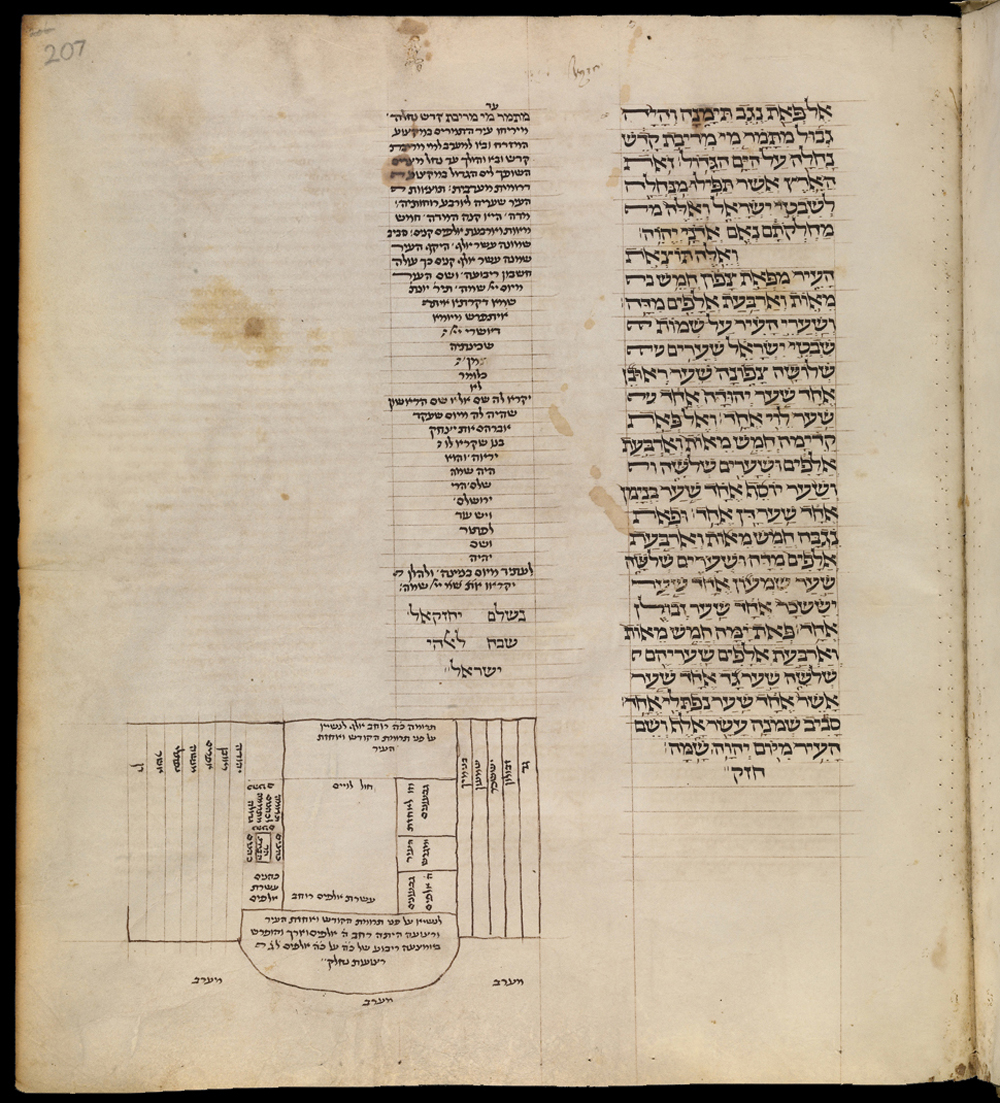
Source lineage
Read the source with its surrounding argument.
The page separates the canonical reference, the commentary and OJS interpretation so the reader can see where each conclusion begins.
This archival object shows the tradition of text and commentary. It is not presented as the exact source quoted on this page.
Book of Prophets with Rashi’s commentary · late 13th century · public-domain reproduction.
What the sources actually say
Tehillim, Psalms 56:11–12
Fear can be named without becoming the ruler
In God, whose word I praise, in the Lord, whose word I praise — in God I trust and will not fear. What can a human being do to me?
The psalm is not spoken from a safe distance. Fear is present, but it is not granted final authority over meaning and action.
Kohelet, Ecclesiastes 11:5–6
Limited knowledge does not cancel action
As you do not know the path of the wind… so you do not know the work of God, who makes everything. In the morning sow your seed, and in the evening do not let your hand rest, for you do not know which will succeed.
Kohelet joins two truths: human knowledge is genuinely limited, and that limitation is not an excuse for paralysis. Wise action remains possible without certainty.
Pirkei Avot 2:16; cited by Rambam, Laws of Torah Study 3:5
Responsibility has limits, but it still exists
You are not required to finish the work, but neither are you free to withdraw from it.
This releases a person from the fantasy of completing the whole future while preserving the duty to do the next part that is actually possible.
This page addresses ordinary fear and uncertainty through reflection and practical steps; it is not mental-health treatment and does not diagnose anxiety disorders. Persistent panic, inability to sleep or function, thoughts of self-harm, danger, abuse or urgent physical symptoms require qualified professional or emergency help. Financial, legal and medical risks also require the relevant specialist. For a concrete halakhic ruling, consult a competent rabbi who knows the facts.
Questions you can explore
Related guides
Tehillim
Tehillim when life is hard: one line can be enough
When life is heavy, long explanations can feel impossible. Tehillim gives a person permission to speak from fear, gratitude, anger, hope and exhaustion.
Sources
Jewish sources for life questions: how to ask well
Many people come to Jewish sources with a real-life question, not an academic topic. The key is to ask in a way that lets the sources illuminate the actual situation.